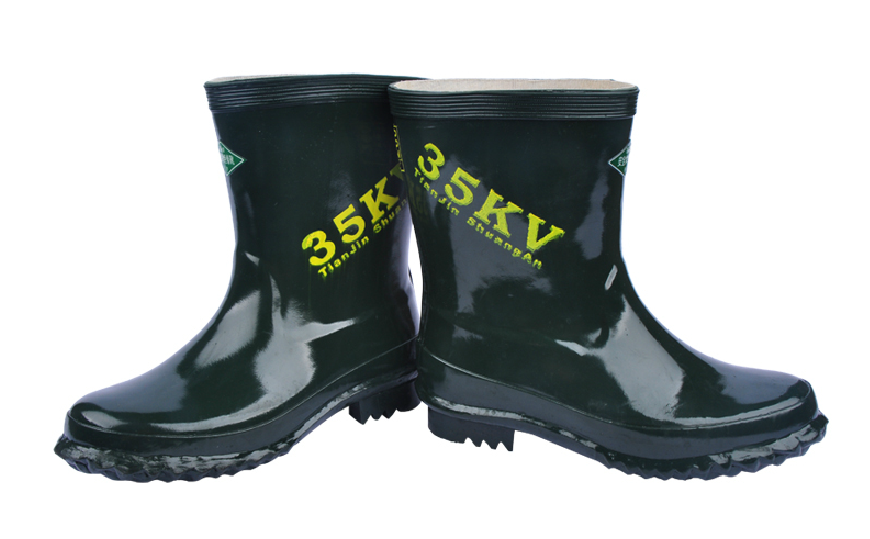

Insulating shoes can prevent what voltage from harming the human body? ~ When an electrician works live, what voltage can insulating shoes withstand to the ground?
According to China's national safety shoe electrical insulation testing, the test standard is a test voltage (power frequency) of 6KV, a test time of 1 minute, and a leakage current of ≤1.8mA. Safety shoes that meet this standard are qualified. So under normal circumstances, it is under 6KV voltage, but the contact time should not be too long.
Applicable scope of insulating shoes: The new standard stipulates that electrically insulating labor protection shoes are used as auxiliary safety tools for electrical work. Labor safety managers should clearly understand this. Often some managers with insufficient electrical knowledge mistakenly believe that 6KV insulating leather shoes or 5KV cloth-surface insulating shoes are applicable in 6KV or 5KV environments, which is very wrong. In electrical safety management, insulating tools are divided into basic safety tools and auxiliary safety tools. The so-called basic safety tools refer to safety tools whose insulation strength is sufficient to withstand the operating voltage of electrical applications, such as insulating rods, insulating clamps, and insulating platforms (ladders). Auxiliary safety tools refer to those that are insufficient to withstand the operating voltage of electrical operations. When used in electrical work, they must be combined with basic safety tools (such as insulating pads and insulating shoes) and cannot contact live parts. However, they can prevent step voltage from harming the human body. Insulating leather shoes and cloth-surface insulating shoes are mainly used as auxiliary safety tools below 1000V power frequency. Anti-static shoes are protective shoes that can eliminate the accumulation of static electricity on the human body and prevent electric shock from power sources below 250V. Conductive shoes have good conductivity and can eliminate static electricity accumulation on the human body in a short time. They can only be used in places without electric shock hazards, which is an important difference from anti-static shoes. Anti-static shoes and conductive shoes of various products should comply with the provisions of GB4385-1995 "Technical Requirements for Anti-static Shoes and Conductive Shoes". Usage and precautions for anti-static shoes and conductive shoes: 1. Both anti-static shoes and conductive shoes can eliminate the accumulation of static electricity on the human body and can be used in flammable and explosive workplaces. However, the difference is that anti-static shoes can also prevent electric shock from power equipment below 250V, while conductive shoes cannot be used in places with electric shock hazards. 2. Although anti-static shoes have the effect of preventing electric shock, they are prohibited from being used as insulating shoes. 3. When wearing anti-static shoes and conductive shoes, one should not simultaneously wear insulating thick wool socks and insulating insoles. 4. The place where anti-static shoes are used should have anti-static flooring, and the place where conductive shoes are used should have conductive flooring. 5. Anti-static shoes should be used together with anti-static clothing. 6. During the wearing process of anti-static shoes and conductive shoes, a shoe resistance test should generally be conducted every 200 hours. If the resistance is not within the specified range, they cannot continue to be used as anti-static shoes or conductive shoes. I believe that after reading these articles introducing insulating shoes, everyone can clearly understand the importance of insulating work shoes in some operations. It is not just a pair of shoes; sometimes it may become your lifeline.