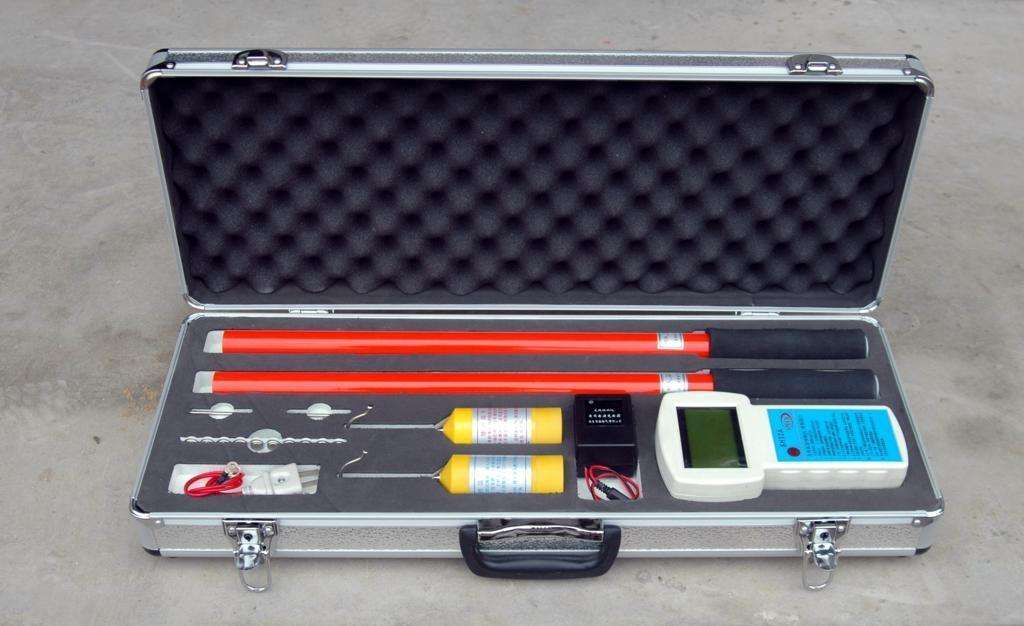
FRD-35KV Multi-function Phase Detector is a favorite in the power equipment industry, highly favored by power industry equipment due to its unique functions, which have gained market preference. With diversified functional expansions, its application scope has become increasingly wide, promising a bright development prospect and laying a solid foundation for market growth.
After the FRD-35KV multi-function phase detector test is completed, use a discharge rod to discharge the test object multiple times. Only after discharging can you approach the test object and perform wiring removal (see the discharge rod instruction manual for details). For small-capacitance test objects such as zinc oxide arresters and magnetic blow arresters, slowly adjust the voltage regulator potentiometer to increase the voltage to the required voltage (current) value, then read the voltage (current) value from the digital display. If a 75% VDC-1mA measurement is required for zinc oxide arresters, first increase the current to 1000uA and stop at that voltage value (record the voltage and current values at this time), then press the yellow button, and the voltage will drop to 75% of the original value and maintain this state. At this point, you can read the microammeter value and voltage value. After the wireless high-voltage phase detector measurement is completed, turn the voltage regulator potentiometer counterclockwise back to zero, press the green button, and press the red button to increase voltage again if needed.
The wireless high-voltage phase detector is used for phase verification and phase sequence verification in power lines and substations, with functions such as phase verification, phase sequence measurement, and voltage detection. The high-voltage phase detector has strong anti-interference capability, complies with (EMC) standard requirements, and adapts to various electromagnetic field interference occasions. The high-voltage phase signal to be measured is extracted by the collector, processed, and then transmitted directly. The phase detector receives it and performs phase comparison, then qualitatively determines the result after phase verification. The high-voltage phase detector uses wireless transmission, truly achieving safety, reliability, speed, and accuracy, suitable for various phase verification occasions. The wireless high-voltage phase detector collector has two types of contact heads that can be replaced as needed. To replace, rotate the contact head counterclockwise to remove it. To replace the battery, rotate counterclockwise to remove the collector shell, then open the battery cover and replace the battery.
The wireless high-voltage phase detector includes two components that are electrically disconnected from each other. The electrode on one device can be connected to the tested wire; one orange transmitter has a hook-shaped electrode for hanging onto the wire, and the other yellow receiver has a Y-shaped electrode for contacting the wire. These electrodes serve as antennas for transmitting and receiving signals. The ends of both the transmitter and receiver should be connected to insulated operating rods. The wireless high-voltage phase detector transmitter has a dual function and operates in a certain sequence.