For transformers with voltage levels of 60KV and above, vacuum oil filling, static placement, and hot oil circulation should be carried out after new installation, major overhaul, or when the core is suspected to be damp.
1. Vacuum Oil Filling
a. Control values for vacuum degree during vacuum oil filling:
Transformer voltage level
Vacuum degree (residual pressure) value Negative pressure value
16000kVA and below 20000kVA and above 16000kVA and below 20000kVA and above
66-110kV level 0.05MPa 220 kV level 133Pa -0.1 MPa
b. During the initial stage of vacuum pumping, the vacuum degree should be increased uniformly to meet the mechanical strength requirements of the oil tank. The three-phase phase shifter has the characteristics of convenient operation, small size, low noise, and good output waveform. It can meet the test and calibration of single-phase and three-phase AC power, phase, and other instruments of higher standards, and can also be used in the verification devices of watt-hour meters. For 66-110kV level transformers, the above vacuum requirements should be achieved within at least 1 hour.
c. When the transformer core is suspected to be damp due to prolonged exposure or other reasons, after evacuation, maintain the vacuum for an extended period. The holding time can be determined based on the degree of dampness, generally 8-24 hours, to facilitate the evaporation of moisture.
d. When filling oil, ensure that the air in the pipeline is completely released. Vent at the oil filling valve until oil overflows, then open the valve to start filling. Oil should be filled from bottom to top at a rate of 2-3 t/h, not exceeding 6 t/h, to prevent oil flow electrification. Stop filling when the oil level is 100-200mm from the top of the tank, and maintain the vacuum. For 110kV level transformers, maintain vacuum for at least 2 hours; for 220kV level, at least 4 hours.
e. Requirements for main accessories during vacuum: For accessories that cannot withstand vacuum mechanical strength, such as oil conservators, oil purifiers, coolers (radiators, coolers), close the butterfly valves to isolate them from the oil tank. For on-load tap changers, connect their oil chamber to the transformer oil tank and evacuate together.
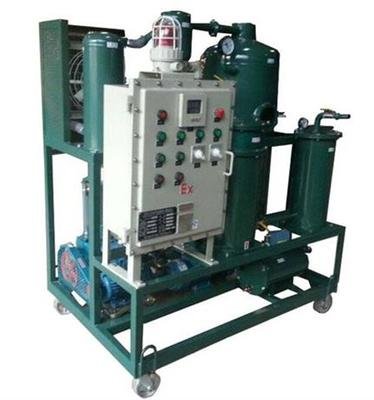
f. For oil filling and draining of products above 66kV, use a vacuum oil filter. Avoid using plate-type oil filters to prevent oil deterioration and the introduction of air and moisture.
g. The oil temperature during filling should be higher than the core temperature. The core temperature should be at least 10-20°C, or when the ambient temperature is low, raise the oil temperature to 30-50°C before filling.
h. Oil filling in the oil chamber of the on-load tap changer should also be done under vacuum, and simultaneously with the oil filling of the main tank.
i. Oil replenishment: This refers to supplementary oil filling to fill the upper space of the tank, accessories, and oil conservator to the oil level corresponding to the ambient temperature. Usually, oil replenishment is done after vacuum is released, from the oil conservator filling valve from top to bottom. Note that when replenishing, open the vent plugs of each accessory in order from bottom to top, including radiators, coolers, oil purifiers, oil collecting boxes, turrets, oil guide boxes, bushing covers, switch covers, gas relays, etc. Also, open the butterfly valves of each accessory and adjust them to the correct position. After replenishing the main body, also replenish the on-load tap changer to the corresponding oil level. For radiators, first open the lower butterfly valve and the upper vent plug, and when oil overflows from the vent plug, open the upper butterfly valve to prevent air in the radiator from entering the tank.
2. Static Placement, Sealing Test, and Venting
a. The overall sealing test pressure is 0.035MPa, or the static oil pressure after filling the conservator can be used. Check for oil leakage in the tank and accessories.
b. Static placement time: From the completion of oil replenishment, for 66-110kV level transformers, it should be ≥24 hours; for 220kV level, ≥48 hours.
c. Venting the transformer, especially the oil conservator, is a crucial step before energization. In addition to venting during oil replenishment, vent multiple times during the static placement period following the same sequence to ensure that all air is expelled from the transformer and its accessories, especially the conservator.
3. Hot Oil Circulation
Usually, when the transformer core shows signs of dampness (due to prolonged exposure or poor environmental conditions during assembly), hot oil circulation is required. The hot oil circulation should be carried out diagonally from top to bottom using a vacuum oil filter. The outlet oil temperature of the filter should not be lower than 50°C, and the temperature inside the tank should be higher than 40°C. Depending on the degree of dampness, the oil temperature can be appropriately raised to around 70°C.
4. Defects and Elimination of Incomplete Venting in Large Transformer Installation
Venting and oil level adjustment are very important tasks in the installation of large transformers. They are basic conditions to ensure the transformer operates normally. If venting is incomplete, the gas relay may operate frequently when the transformer is energized, especially for 220kV level transformers during partial discharge tests, the partial discharge may increase, causing failure, and even H2 generation. Information source: tede.cn
The air inside the transformer consists of two parts: one part is the air trapped in the insulation components and coils inside the main body (bubbles), and the other part is the air in the accessories, including radiators (coolers), oil purifiers, pressure relief valves, oil conservators, etc. When the main body is evacuated, the spaces in these accessories are isolated from the main body, and the air inside them must be expelled. Therefore, after vacuum oil filling and oil replenishment, venting is essential. The specific method is: "First lower, then upper (first low, then high), isolate the oil tank, and vent each part completely."
(1) Venting the oil pump (for old submersible pumps during overhaul): First open the lower butterfly valve of the cooler, loosen the vent plug on the oil pump, then appropriately open the butterfly valves on the inlet and outlet of the submersible pump. When oil overflows from the vent plug, tighten the vent plug in sequence. For disc pumps, there is no venting issue.
(2) Oil purifier (if any): First open the lower butterfly valve, close the upper butterfly valve, loosen the top plug, and after oil overflows, tighten the top plug, then open the upper butterfly valve.
(3) Cooler: From bottom to top, steps as above.
(4) Pay attention to venting the oil collecting box.
(5) Vent the turrets and top of high, medium, and low voltage bushings until oil overflows. For oil-impregnated capacitive bushings, there is no oil at the top, but air should not be allowed to create pressure. Vent once, then properly install and tighten the sealing gasket in the terminal.
(6) Venting the oil conservator and adjusting oil level: For sealed conservators, including capsule-type and diaphragm-type, ensure that the air between the capsule/diaphragm and the tank wall is completely expelled to ensure normal breathing. There are two venting methods: gas filling method and oil filling method. Adjust the oil level properly.
(7) Venting the oil chamber of the on-load tap changer: Loosen the vent plug on the top cover until oil overflows.
(8) Venting the pressure relief valve: Use the vent plug on the turret to release the gas inside the turret.
Venting frequency: Vent multiple times. Before the impact energization, perform a final venting to ensure all air is expelled. This way, the transformer will not experience frequent light gas alarms during initial operation, and high-voltage transformers will not have increased partial discharge or H2 exceeding the standard due to trapped air.