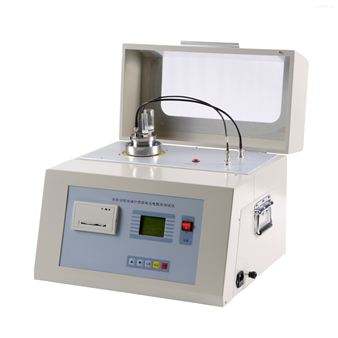

Points to Note During Operation of High-Voltage Dielectric Loss Tester
High-Voltage Dielectric Loss Tester is a high-precision instrument used for fully automatic measurement of dielectric loss tangent and capacitance of various high-voltage power equipment at power plants, substations, and other sites. It is also suitable for measuring the tgδ and capacitance of high-voltage electrical equipment in workshops, laboratories, and scientific research institutions. It has the advantages of convenience, simplicity, and accuracy for insulation oil loss testing. Improper operation will inevitably reduce the service life of the instrument. The following will introduce the precautions for using the instrument:
1. The instrument comes with a voltage boosting device. Pay attention to the insulation of the high-voltage lead and personnel safety;
2. The instrument should be reliably grounded;
3. Before using this instrument to test equipment, an insulation test should be performed on the equipment first;
4. Determine the voltage withstand level of the equipment, correctly select the voltage boosting gear of the instrument to prevent breakdown of the equipment and damage to the instrument;
5. After the instrument is started, do not suddenly cut off the power supply to avoid overvoltage damage to the equipment;
6. If the instrument enters the protection state (protection light is on), check whether the input voltage is too high, and whether the tested object is severely leaking or broken down. At this time, the power must be turned off and then restarted;
7. Although the special high-voltage cable (Cx) provided with the instrument has been tested and qualified at the factory, it still needs to be kept away from the human body and the low-voltage test line (Zx) during measurement;
8. The voltages 2KV/5KV/10KV refer to the voltage when the input is AC220V;
9. The input voltage is AC220V±10%. Exceeding this range may affect the test accuracy; the maximum input voltage is AC264V. Exceeding this value will cause structural damage;
10. The printer may experience paper jams during transportation due to loose paper rolls. In this case, simply take out the paper roll, tighten it, and reinstall it;
11. The instrument should be protected from moisture and severe vibration;