
DC resistance measurement
1 Measurement method
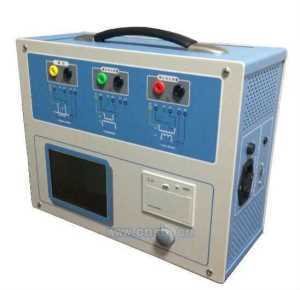
Measuring DC resistance is an important item in transformer testing. Through measurement, defects such as poor contact in the conductive circuit, poor soldering, coil faults, and wiring errors can be detected. In the actual measurement of medium and small transformers, the DC bridge method is mostly used. When the resistance value of the tested coil is above 1 ohm, a single-arm bridge is used; for below 1 ohm, a double-arm bridge is used. When wiring with a double-arm bridge, the potential terminals of the bridge should be close to the resistance under test, and the current terminals should be connected above the potential terminals. Before measurement, estimate the resistance value of the coil under test, set the bridge multiplier knob to an appropriate position, short-circuit and ground the non-tested coils, then turn on the power switch to charge. After sufficient charging, press the galvanometer switch and quickly adjust the measuring arm to move the galvanometer pointer toward the zero line in the middle of the galvanometer scale, fine-tune until the pointer stops steadily at zero, then record the resistance value. At this time, the resistance of the tested coil = multiplier × measuring arm resistance.Frequency conversion comprehensive tester for instrument transformers, is a multifunctional field test instrument specially designed for testing instrument transformers: volt-ampere characteristics, ratio, polarity, error curve, angle difference and ratio difference, calculating knee point, and secondary side circuit inspection, etc. After measurement, first release the galvanometer button, then turn off the power switch.
2 Precautions
During the measurement process, in addition to strictly complying with electrical safety regulations and equipment test procedures, special attention should be paid to:
1) Perform the measurement when the coil temperature is stable, requiring that the temperature difference between the upper and lower parts of the transformer oil tank does not exceed 3°C;
2) Since the transformer coil has inductance, the charging current during measurement is not very stable. Be sure to count only after the current is stable, and if necessary, take measures to shorten the charging time;
3) Minimize the contact resistance of the wires in the test circuit. The tap changers of transformers in operation are often affected by contaminants such as oil film, causing poor contact. Generally, it is necessary to switch several times before measuring to avoid misjudgment.