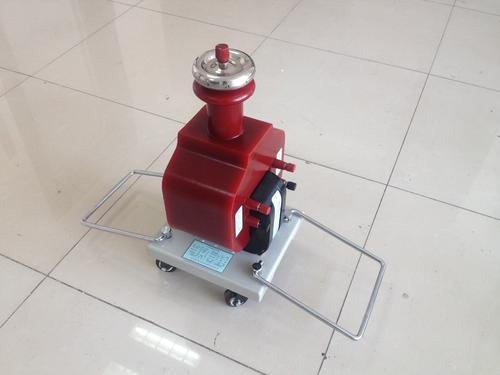
Overload Capacity of Dry-type Test Transformer
The overload capacity of a dry-type test transformer is related to the ambient temperature, the load condition before overload (initial load), the insulation heat dissipation condition of the transformer, and the thermal time constant. If necessary, the overload curve of the dry-type transformer can be obtained from the manufacturer.
How to utilize its overload capacity? The author proposes two points for designers' reference:
(1) The transformer capacity can be appropriately reduced during selection and calculation: fully consider the possibility of short-term impact overload of certain equipment such as steel rolling and welding — try to utilize the strong overload capacity of dry-type transformers to reduce transformer capacity; for places with uneven loads, such as residential areas mainly for night lighting, cultural and entertainment facilities, and shopping malls mainly for air conditioning and daytime lighting, its overload capacity can be fully utilized to make the main operation time at full load or short-term overload, thus appropriately reducing the transformer capacity during calculation and selection.
(2) The reserve capacity or the number of units can be reduced: in some places, the reserve coefficient requirement for transformers is high, resulting in large capacity and many units in engineering selection. By utilizing the overload capacity of dry-type transformers, the reserve capacity can be compressed when considering it; the number of reserve units can also be reduced. For example, when the design calculation capacity Sjs30=1400kVA, two 1000kVA dry-type test transformers can be selected (instead of three). When one transformer fails and needs to be taken out of operation, the other can handle the entire load in an emergency; if the load is heavy and the temperature exceeds 110°C, the forced air cooling system will automatically start, increasing its overload capacity to 1.4 to 1.5 times. When the transformer is running under overload, it is important to monitor its operating temperature: if the temperature rises to 155°C (an alarm is issued), load reduction measures (removing some non-essential loads) should be taken to ensure safe power supply to the main loads; and when the fault is handled, the stopped transformer should be quickly put back into operation to restore normal system operation.