I. Overview
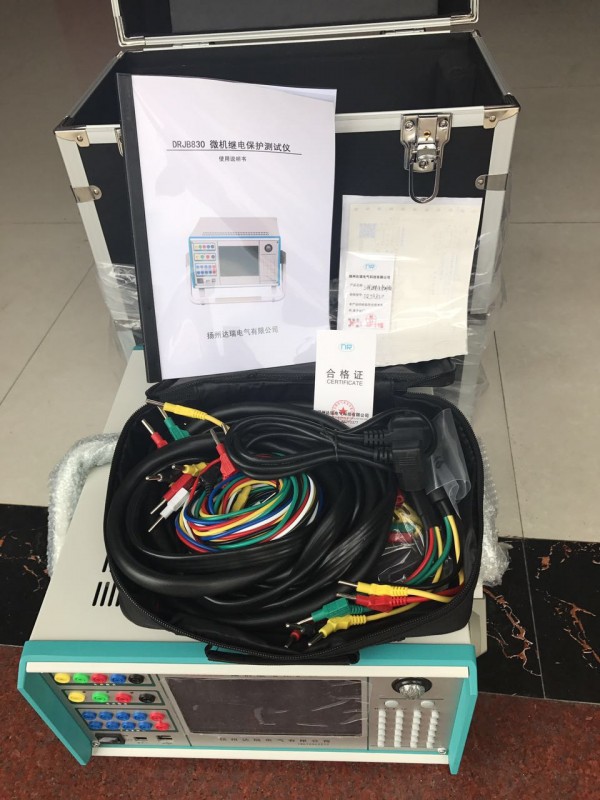
With the expansion of the company's production scale and the improvement of production automation level, the requirements for the automation degree of the electrical system in the production process are also increasing, prompting the large-scale use of microcomputer relay protection devices in the power system. The analog quantities, switching quantities, and primary equipment status quantities collected by various intelligent devices in the power system have greatly increased, allowing operators to obtain more real-time information about primary and secondary equipment. However, since the current microcomputer-based secondary equipment mainly considers replacing the functions of previous equipment, these devices basically operate independently, resulting in the large amount of information they collect being wasted and not fully utilized.
The power system is an indivisible whole. Comprehensive utilization of the information of primary and secondary equipment in the entire system is of great significance for ensuring safe power supply. In recent years, the rapid development of computer and network technology has made it possible to comprehensively utilize the information of primary and secondary equipment in the entire power system. By comprehensively utilizing the information collected by intelligent devices in the entire power system, manually or automatically calculating and analyzing the information, and adjusting the working state of relay protection, it is conducive for staff to analyze and handle accidents, adjust operation modes, and carry out technical management of equipment. It can achieve the following main functions:
1. Real-time monitoring of the operation status of each 6KV main substation, and scientific dispatch management;
2. Achieve rapid and accurate positioning and handling of various complex system accidents;
3. Use the fault recording and fault information records of various devices to quickly and accurately find and analyze the cause of faults;
4. Through the comprehensive utilization of the programming functions and binary input quantities of various devices, realize the interlocking of electrical equipment itself and cooperate with the instrument DCS control system;
5. Adjust and switch relay protection devices from a distance;
6. Analyze and study the reliability of relay protection devices operating in the system.
II. Analysis and Discussion of Practical Application
1. Realize real-time monitoring of the operation status of the 110KV substation and each 6KV main substation, so that operators can timely and accurately understand the operation status of the system, and achieve scientific dispatch management of the system operation mode, ensuring that the company's entire power supply system is in a safe, reliable, and economical state. At the same time, technical personnel can use computer intelligent software and process energy optimization technology to analyze and calculate all collected information, adjust the operation mode in a timely manner according to the actual situation of the power supply system, reduce the power loss of power supply lines and substation equipment, and promote the safe, stable, and long-term operation of the power supply system, achieve energy conservation and emission reduction, reduce the production cost of the enterprise, and enhance the market competitiveness of enterprise products.
2. Achieve rapid and accurate positioning and handling of various complex system accidents. The current fault location algorithms of protection and fault recorders are generally divided into two categories: fault analysis method and traveling wave method. Among them, the traveling wave method is difficult to be well applied in production due to problems such as the extraction of traveling wave signals and the uncertainty of traveling waves generated by faults. If the fault analysis method wants to accurately locate faults, it must obtain information such as the comprehensive impedance at both ends of the line before the fault, the operation mode of adjacent lines, and the mutual inductance with adjacent lines. Obviously, it is difficult to achieve accurate fault location only using the data collected by protection or fault recorders themselves. In addition, for more complex faults, single-ended analysis methods can no longer correctly judge the nature and distance of the fault. We know that the more system fault information obtained, the more accurate the judgment of the fault nature, fault location, and fault distance detection. Therefore, by using the primary equipment parameters already stored in the dispatch end database and sharing the data of the EMS system, the operation status of the primary equipment before the fault can be obtained. After the fault occurs, the client computers of the substations at both ends of the line can collect fault reports from protection and fault recorders and upload them to the server. The dispatch end server comprehensively utilizes the above information, and through relatively simple fault calculation, can determine the nature of the fault and achieve accurate fault location.
3. Use the fault recording and fault information records of various devices to quickly and accurately find and analyze the cause of faults. After a system accident, it is often accompanied by misoperation of other protections or protections of adjacent circuits. Traditional accident analysis is completed by personnel going to the locations of protection actions to collect data for analysis, which is easily affected by personal experience, level, and the performance of old relay protection devices, and is prone to deviations. Since the comprehensive automation system composed of microcomputer relay protection collects the operation status and data of primary equipment before and after the fault, as well as the fault reports of substation protection and fault recorders, it can comprehensively analyze the protection action information at both ends of the line and other protection action information at the same end for fuzzy analysis, and rely on the sampling data of protection and fault recorders for precise calculation, thereby being able to make rapid and accurate judgments.
4. Through the comprehensive utilization of the programming functions and binary input quantities of microcomputer relay protection devices, realize the interlocking of electrical equipment itself and cooperate with the instrument DCS control system: by using the thermal model, with the stator current of the high-voltage asynchronous motor as the initial value, the real-time temperature of the rotor can be indirectly calculated. When this temperature exceeds the motor's restart limit, the motor is not allowed to restart until the temperature drops below the limit temperature;
5. Adjust and switch relay protection devices from a distance to quickly adapt to the adjustment and transformation of operation modes.
6. Analyze and study the reliability of relay protection devices operating in the system. By exchanging information such as protection configuration, service time, correct operation rate and abnormal rate of various protection devices with the relay protection management information system, the reliability of relay protection devices can be analyzed through computer software. Especially when a certain protection or protection signal transmission device has problems and cannot be solved temporarily, by reducing the reliability evaluation of such devices, the system's dependence on such protection is reduced, and through remote adjustment of setting values and other means, coordination with the protection of upper and lower circuits is achieved, preventing the expansion of accident scope due to refusal of such protection.
III. Analysis of Existing Problems and Discussion of Solutions
1. Security issues: Since the comprehensive automation system of power grid relay protection has powerful functions and can control operating equipment, it is closely related to the safe and stable operation of the power grid. Therefore, at the beginning of design, sufficient attention must be paid to the security issues of the system. It can be said that the quality of security solutions will be the key to whether the microcomputer relay protection comprehensive automation system can be applied. Preliminary ideas: the dispatch end server must adopt dual-machine hot standby mode to ensure hardware security; when remotely modifying protection setting values, the client must verify the credibility of the setting values transmitted from the dispatch end through encrypted digital signatures, and ensure the reliability of the setting values through check codes and data return. Moreover, when the client transmits setting values to the protection, it must not affect the normal performance of the protection. In this regard, a lot of work still needs to be done.
2. Protocol issues: It is necessary to connect all microcomputer protections, fault recorders, and on-site intelligent acquisition devices in the entire network. If the organization and transmission protocol of information can be well solved, it will play a multiplier effect on the implementation of the system. Therefore, it is hoped that, referring to foreign standards, domestic relay protection information organization protocols will be established as soon as possible.
IV. Conclusion
Through the above analysis, we can see that with the widespread application of microcomputer relay protection in chemical enterprises, the realization of substation comprehensive automation systems will bring a qualitative leap to the relay protection work of chemical enterprises. It will greatly enhance the effectiveness and reliability of relay protection and is of great significance for ensuring the safe and stable operation of the enterprise's power supply system. It is hoped that in the future, scientific research, operation, and design personnel will strengthen the research on the comprehensive utilization of microcomputer relay protection devices and related intelligent equipment information, and further improve the scientificity, rationality, and rapidity of the comprehensive utilization of microcomputer relay protection.