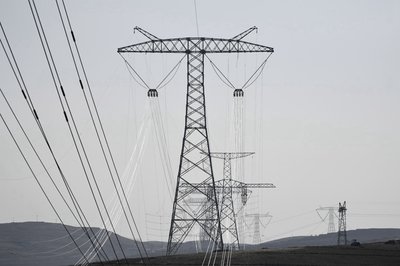
The economic comparison between UHV and EHV transmission is generally conducted by comparing transmission costs, comparing the transmission costs of two voltage levels for delivering the same power over the same distance. There are two comparison methods: one is to compare their initial investment costs based on the same reliability index; the other is to compare their life cycle costs. The basic data required for both methods are:On-load tap changer testerusing microcomputer technology, without disassembling the transformer or lifting the switch, it can test the performance of on-load tap changers of various power transformers, constituting the statistical equipment prices and construction costs for two voltage level transmission projects. For cost comparisons conducted in the planning and design of UHV and EHV transmission projects, statistical average prices or price indices can be used for equipment prices and construction costs. Both comparison methods require reliability analysis and calculation, and through analysis and calculation, the expected reliability index of the transmission project is proposed. Using the life cycle cost method for economic comparison also requires statistical economic loss data caused by transmission interruptions.
The transmission capacity of one 1100kV UHV transmission line can reach more than 4 times that of a 500kV conventional transmission line, that is, the transmission capacity of 4-5 500kV transmission lines is equivalent to that of one 1100kV transmission line. Obviously, in terms of operation and maintenance of lines and substations, the cost required for UHV transmission will be much lower than that for EHV transmission. Line power and energy losses account for a considerable proportion of operating costs. When transmitting the same power, the power loss of a 1100kV line is about 1/16 of that of a 500kV line. Therefore, UHV transmission has a stronger competitive advantage in operating costs.