
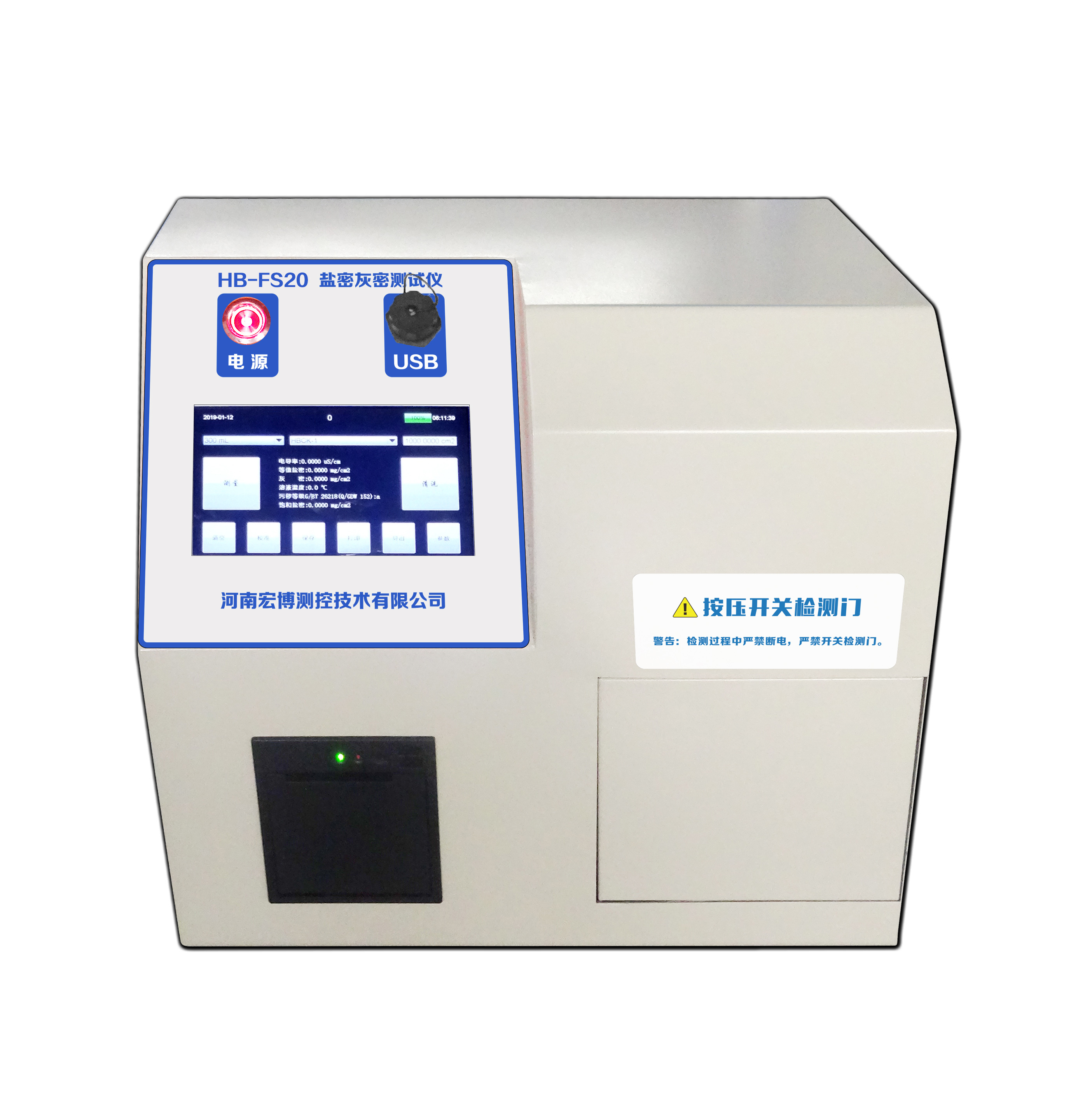
To understand what the critical value of insulator salt density is, it is necessary to first understand what the salt density of an insulator is. In simple terms, the salt density of an insulator refers to the salt content in the contaminants covering a unit area of the insulator surface. Detecting the salt density of insulators can effectively provide a reference for power inspections, facilitating line maintenance and management for power companies. It is usually measured using an insulator salt density tester. The Hongbo Measurement and Control HB-FS20 insulator salt density tester product can detect the salt density and ash density of insulators with one click, which is very convenient and practical.
The critical value of insulator salt density, also known as the critical salt density value, refers to a threshold at which the salt density of an insulator affects its normal operation. When the salt density reaches this critical value, the insulator can no longer operate normally and requires maintenance or replacement; if it does not reach this threshold, the tested insulator can continue to operate normally.