

In power systems, in order to detect the accuracy status of high-current transformers, it is necessary to provide a high-current generator with adjustable current at the corresponding current level. Traditional 50Hz AC high-current generators have problems such as low efficiency, large size and weight, low power factor, and inconvenience in field carrying. This paper proposes the use of power electronics technology to achieve adjustable high-current output. The thesis first introduces the research background of the subject. In view of the shortcomings of traditional high-current generators, a three-stage high-current generator structure consisting of AC/DC PFC + high step-down ratio DC/DC transformer + low-voltage high-current DC/AC inverter is proposed. Subsequently, the research status of DC transformers and low-voltage high-current inverters is analyzed in detail. The second chapter studies the high step-down ratio LLC resonant DC transformer to meet the requirements of high input voltage and low output voltage. The influence of the secondary-side leakage inductance of the transformer on the gain of the LLC resonant converter is analyzed, and methods to improve the external characteristics and efficiency of the LLC resonant DC transformer are proposed. A multi-transformer PSSP topology with a shared switching network is proposed to improve the external characteristics, and the influence of transformer parameter differences on current sharing is analyzed. The third chapter conducts a comparative analysis of several control strategies for a non-isolated full-bridge controllable current source inverter with common DC and AC buses. The harmonic composition of the inductor current under carrier-interleaved unipolar frequency-doubling control is analyzed, and based on the operating modes, the expression for the maximum ripple of a single inductor current in the interleaved parallel state is derived. The ripple differences between non-interleaved and interleaved conditions are compared, providing guidance for optimal inductor design. The fourth chapter presents the parameter design methods for the main circuit and control circuit of the LLC resonant transformer and the high-current inverter, respectively. A prototype of the LLC resonant transformer and a system prototype consisting of two inverter modules with common DC bus interleaved parallel connection are developed and experimentally verified. The experimental results confirm the correctness of the theoretical analysis.
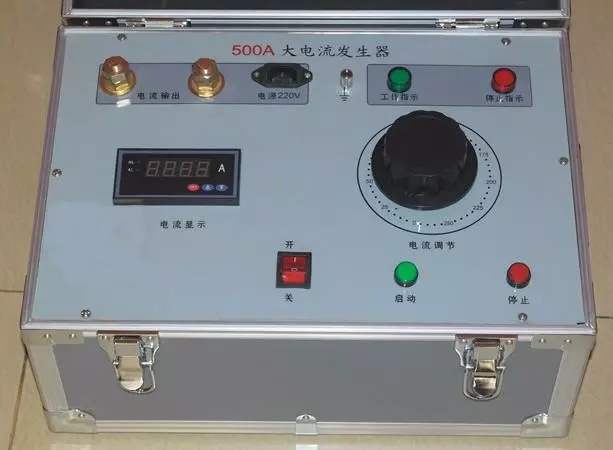
In power systems, in order to detect the accuracy status of high-current transformers, it is necessary to provide a high-current generator with adjustable current at the corresponding current level. Traditional 50Hz AC high-current generators have problems such as low efficiency, large size and weight, low power factor, and inconvenience in field carrying. This paper proposes the use of power electronics technology to achieve adjustable high-current output. The thesis first introduces the research background of the subject. In view of the shortcomings of traditional high-current generators, a three-stage high-current generator structure consisting of AC/DC PFC + high step-down ratio DC/DC transformer + low-voltage high-current DC/AC inverter is proposed. Subsequently, the research status of DC transformers and low-voltage high-current inverters is analyzed in detail. The second chapter studies the high step-down ratio LLC resonant DC transformer to meet the requirements of high input voltage and low output voltage. The influence of the secondary-side leakage inductance of the transformer on the gain of the LLC resonant converter is analyzed, and methods to improve the external characteristics and efficiency of the LLC resonant DC transformer are proposed. A multi-transformer PSSP topology with a shared switching network is proposed to improve the external characteristics, and the influence of transformer parameter differences on current sharing is analyzed. The third chapter conducts a comparative analysis of several control strategies for a non-isolated full-bridge controllable current source inverter with common DC and AC buses. The harmonic composition of the inductor current under carrier-interleaved unipolar frequency-doubling control is analyzed, and based on the operating modes, the expression for the maximum ripple of a single inductor current in the interleaved parallel state is derived. The ripple differences between non-interleaved and interleaved conditions are compared, providing guidance for optimal inductor design. The fourth chapter presents the parameter design methods for the main circuit and control circuit of the LLC resonant transformer and the high-current inverter, respectively. A prototype of the LLC resonant transformer and a system prototype consisting of two inverter modules with common DC bus interleaved parallel connection are developed and experimentally verified. The experimental results confirm the correctness of the theoretical analysis.