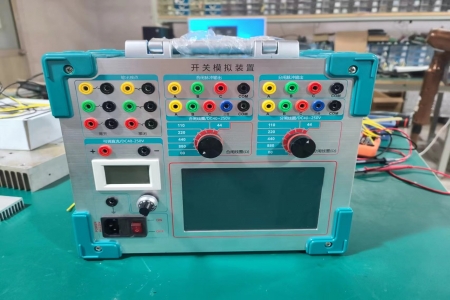
Transformers are indispensable key equipment in power systems, used to change voltage levels and achieve efficient transmission and distribution of electrical energy. To ensure the normal operation and long-term reliability of transformers, regular characteristic testing is very necessary. The transformer characteristic test bench is a professional device specifically used to test various performance indicators of transformers.
Importance of transformer characteristic testing
Transformers play a crucial role in power systems, and any fault can lead to large-scale power outages or equipment damage. Therefore, through characteristic testing, potential hidden dangers in transformers can be detected in a timely manner, their health status can be assessed, and corresponding maintenance measures can be taken to extend the service life of the equipment.
Test items
Transformer characteristic testing usually includes the following important tests:
Voltage ratio test: Measure the ratio of input voltage to output voltage of the transformer to verify whether its design meets the requirements.
Winding resistance test: Measure the DC resistance of each winding of the transformer to check for inter-turn short circuits or other abnormal resistance conditions.
No-load test: Apply rated voltage to one side of the transformer with the other side open, measure the no-load current and no-load loss, thereby evaluating core loss and excitation characteristics.
Load test: Apply rated voltage and rated current to one side of the transformer, measure the load current and load loss, and evaluate copper loss and efficiency.
Temperature rise test: By simulating long-term load under operating conditions, measure the temperature rise of various parts of the transformer to ensure it does not overheat under normal working conditions.
Insulation resistance test: Measure the insulation resistance between windings and between windings and the shell to ensure good insulation performance.
Partial discharge test: Detect whether there is partial discharge inside the transformer and evaluate the stability of its insulation system.
Functions of the test bench
The transformer characteristic test bench is usually an integrated system that can complete the above multiple tests and has the following functions:
Multi-channel measurement: Supports simultaneous measurement of multiple parameters, improving test efficiency.
Automated control: Controls the test process through software, reducing human errors.
Data recording and analysis: Automatically records test data and provides analysis reports for later evaluation.
Safety protection: Equipped with multiple protection measures such as overvoltage, overcurrent, and short circuit to ensure test safety.
Test steps
Preparation stage: Ensure the test bench and the transformer under test are in good condition, and connect the test leads.
Set parameters: Set corresponding voltage, current, and other parameters according to test requirements.
Execute tests: Start the test program and conduct various tests in sequence.
Data recording: Record various data during the test process.
Result analysis: Analyze whether the various performance indicators of the transformer meet the standards based on the test results.
Application example
During a routine maintenance work of a large power company, technicians used a transformer characteristic test bench to conduct a comprehensive inspection of an old transformer. Through multiple tests such as voltage ratio, winding resistance, no-load and load tests, it was found that the transformer had an imbalance in winding resistance. After further inspection, it was confirmed that the internal winding was loose, and it was repaired in a timely manner, avoiding potential safety hazards.
Conclusion
The transformer characteristic test bench is an important tool in power system maintenance. Through regular detailed characteristic testing, the safe operation of transformers can be effectively guaranteed and their service life extended. With technological advancements, future test benches will become more intelligent and convenient, providing more support for the maintenance of power systems.