
Title
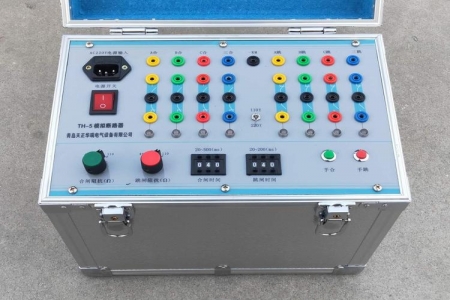
Partial Discharge Detector: Key Technology for Ensuring Safe Operation of Power Equipment
Introduction
Briefly introduce the concept of partial discharge and its impact on power equipment.
Emphasize the importance of partial discharge detection for preventive maintenance and fault diagnosis.
Basic Principles of Partial Discharge
Explain the mechanism of partial discharge, including various forms that may occur in high-voltage equipment.
Describe typical characteristics of partial discharge, such as frequency range, energy level, etc.
Working Principle of Partial Discharge Detector
Introduce the main components of the detector, such as sensors, preamplifiers, filter amplifiers, main amplifiers, etc.
Explain the role of coupling capacitors and how partial discharge detection is achieved by detecting high-frequency pulse currents.
Describe the signal processing flow, including signal amplification, filtering, peak detection, etc.
Technical Specifications and Performance Indicators
Frequency response range: Describe the signal frequency range that the detector can effectively detect.
Sensitivity: The ability of the tester to detect the smallest partial discharge signals.
Dynamic range: The ability of the tester to distinguish between partial discharge signals of different intensities.
Anti-interference capability: The ability to maintain accurate measurements in complex electromagnetic environments.
Application Cases
Describe application cases of partial discharge detectors in actual power equipment maintenance, such as on transformers, cables, switchgear, etc.
Provide examples of how partial discharge detection helps power companies identify and resolve potential equipment issues in advance.
Operating Methods and Precautions
Introduce the correct installation and commissioning steps for partial discharge detectors.
Provide basic operating procedures and precautions during use.
Emphasize the importance of safety measures, including grounding requirements, high-voltage safety operations, etc.
Maintenance and Care
Provide recommendations for daily maintenance and care of the equipment.
Explain how to periodically calibrate the equipment to ensure its accuracy and reliability.
Future Development Trends
Discuss the latest advancements in partial discharge detection technology, such as intelligent analysis software, remote monitoring systems, etc.
Look forward to possible future technological innovations, such as new sensor technologies, wireless transmission technologies, etc.
Conclusion
Summarize the important role of partial discharge detectors in power equipment maintenance.
Emphasize the significance of continuously paying attention to and adopting the latest technologies for improving the reliability of power systems.
References
List the reference materials used during the writing process, including technical manuals, academic papers, industry reports, etc.
Based on the above outline, you can start writing the article about partial discharge detectors. Remember to combine the latest research and technological advancements to ensure the accuracy and timeliness of the article content. If you need further information or specific data, please feel free to let me know.