Of course. The following is an outline of an article on partial discharge detection devices for instrument transformers, including introduction, working principle, detection methods, application examples, and conclusions:
Research and Application of Partial Discharge Detection Device for Instrument Transformers
1. Introduction
Background: With the increasing complexity and higher voltage levels of power systems, the safe and stable operation of power equipment has become particularly important. As key components in power systems, the health status of instrument transformers directly affects the safe operation of the entire power grid.
Hazards of Partial Discharge: Elaborate on the impact of partial discharge phenomena on the insulation performance of instrument transformers and their potential hazards to the power system.
Research Purpose: Introduce that this article aims to explore the working principle, detection methods, and effectiveness in practical applications of partial discharge detection devices for instrument transformers.
2. Working Principle of Partial Discharge Detection Device
Physical Phenomena: When partial discharge occurs inside an instrument transformer, physical phenomena such as electromagnetic waves and ultrasonic waves are generated inside the equipment and in the surrounding space.
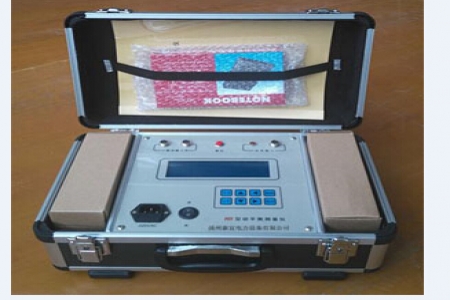
Signal Capture: The partial discharge detection device for instrument transformers can capture these electromagnetic wave signals and process and analyze them.
Data Analysis: Through advanced signal processing techniques, such as digital filtering and spectrum analysis, the degree of partial discharge is located and evaluated.
3. Partial Discharge Detection Methods
Apparent Discharge Quantity Measurement: Simulate partial discharge conditions through an apparent discharge quantity calibrator, adjust the range of the partial discharge detector to accurately measure the discharge quantity.
Selection of Detection Impedance: Select appropriate detection impedance according to different test purposes and types of test objects to improve measurement sensitivity and resolution.
Data Comparison and Analysis: Use historical data for comparison to evaluate the trend of insulation status changes in instrument transformers.
4. Application Examples
Case Description: Select a specific case of live detection of partial discharge defects in a 220kV current transformer.
On-site Detection: Introduce the problems found during on-site infrared detection and how further diagnosis is carried out through partial discharge detection devices.
Result Analysis: Based on detection data, evaluate the insulation status of the instrument transformer and propose corresponding maintenance recommendations.
5. Conclusion and Outlook
Conclusion Summary: Summarize the important role of partial discharge detection devices for instrument transformers in ensuring the safety of power systems.
Future Development Trends: Discuss future development directions of partial discharge detection technology, such as intelligence and online monitoring.
6. References
Related Literature: List the relevant academic papers and technical reports cited in this article to provide readers with resources for further learning.
Please adjust or supplement the above outline according to your specific needs. If you need more detailed content or have other specific requirements, please let me know.