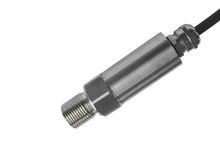
With the development of technology, the piezoelectric effect has also been applied to polycrystalline materials. Currently, the main piezoelectric materials widely used in piezoelectric pressure sensors are: ammonium dihydrogen phosphate, potassium sodium tartrate, and quartz. Quartz is a natural crystal, and the piezoelectric effect was discovered based on this crystal. Within a specified range, the piezoelectric properties do not disappear but persist continuously.Line Fault Distance Tester can accurately measure the fault distance by testing the faulty line in the substation, determine the faulty tower, facilitate rapid fault location by repair personnel, and shorten repair time. If the temperature goes beyond this specified range, the piezoelectric properties will completely disappear. When stress changes, the change in electric field is very small, and other piezoelectric crystals will replace quartz. Potassium sodium tartrate has a large piezoelectric coefficient and piezoelectric sensitivity, but it can only be used in places with low indoor humidity and temperature. Ammonium dihydrogen phosphate is a synthetic crystal that can be used in environments with high humidity and high temperature, so it is widely applied.
The principle of piezoelectric pressure sensors is mainly the piezoelectric effect, which uses electrical components and other mechanical devices to convert the pressure to be measured into an electrical quantity, and then perform related measurement work as a precision measuring instrument, such as many pressure transmitters and pressure sensors. Piezoelectric sensors cannot be used in static measurements because the charge generated by external force can only be preserved when the circuit has infinite input impedance. Therefore, piezoelectric sensors can only be used in dynamic measurements.
Sensors based on the piezoelectric effect are electromechanical conversion and self-generating sensors. Their sensitive element is made of piezoelectric materials. When the piezoelectric material is subjected to external force, charges are formed on its surface. After amplification by a charge amplifier, amplification by the measurement circuit, and impedance transformation, the charges are converted into an electrical output proportional to the applied force. It is used to measure force and non-electrical physical quantities that can be converted into force, such as acceleration and pressure. It has many advantages: light weight, reliable operation, simple structure, high signal-to-noise ratio, high sensitivity, and wide frequency range. However, it also has some disadvantages: some piezoelectric materials are sensitive to moisture, so a series of moisture-proof measures need to be taken, and the response of output current is relatively poor, so a charge amplifier or high input impedance circuit is needed to compensate for this shortcoming and make the instrument work better.
Piezoelectric pressure sensors have a wide range of applications. They can measure the combustion pressure inside engines and are frequently used in electroacoustics, biomedical engineering, and engineering mechanics. In addition to the above fields, piezoelectric pressure sensors can also be applied in the military. They can measure the change in chamber pressure at the moment of firing a gun or artillery shell in the bore, as well as the shock wave pressure at the muzzle.
In addition, due to the long service life, light weight, small size, and simple structure of piezoelectric pressure sensors, they are widely used in measuring impacts and vibrations of buildings, bridges, automobiles, and aircraft, and can also play a special role in the aerospace and aviation fields.