Handling of Parameter Setting Faults
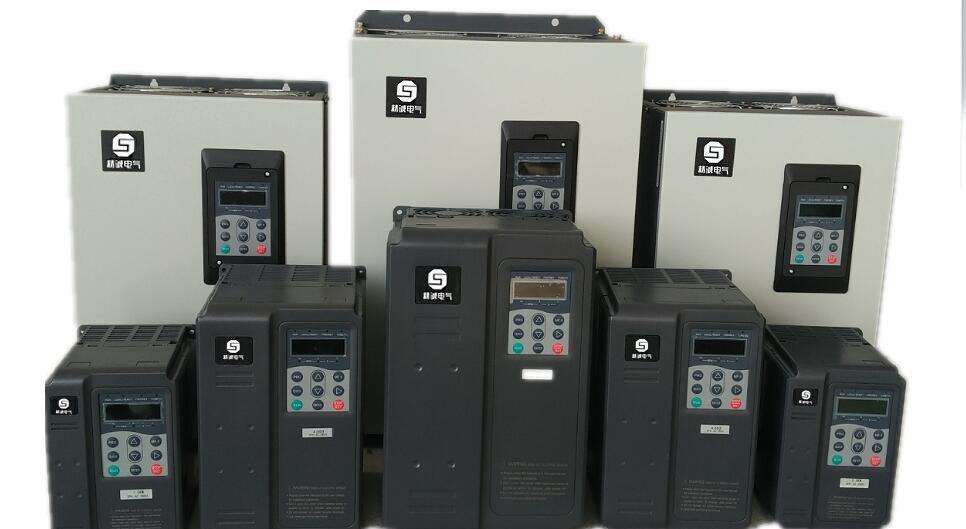
If a frequency converter encounters parameter setting faults and cannot operate normally, restore all parameters to factory defaults and then reset the relevant parameters. The method for restoring parameters varies among different manufacturers. For the second and third categories of parameters, the factory defaults can be restored by changing the application macro.Cable Fault Testers are divided intothree parts, used for testing various faults of power cables, locating cable paths and burial depths, and daily maintenance management of cable archives
Overvoltage Faults
For frequency converters, there is a normal operating voltage range. When the voltage exceeds this range, it is likely to damage the converter. There are two common types of overvoltage.
1. Input AC Overvoltage
This refers to the input AC power supply voltage exceeding the normal value. It generally occurs during holidays when the line load is light and the voltage rises, or when there is a line fault. I often encounter this on Monday mornings when the frequency converter alarms with a fault indication. Disconnect the power, wait a moment, and then restart it to operate normally.
2. Overvoltage in Generating State
This situation occurs with a higher probability. It mainly happens when the actual speed of the motor is higher than the synchronous speed, causing the motor to be in a generating state, or when an intermediate frequency furnace works to feed energy back to the grid, and the frequency converter is not equipped with a braking unit. The following conditions can cause this fault.
(1) When the frequency converter drives a large inertia load and the deceleration time is set too short, during deceleration, the output frequency decreases rapidly, but the load decelerates slowly due to its own resistance, causing the load to drive the motor at a speed higher than the synchronous speed corresponding to the output frequency. The motor is in a generating state, and since the converter lacks energy feedback capability, the DC bus voltage rises above its protection value, resulting in a fault.
(2) When an intermediate frequency furnace or intermediate frequency equipment feeds energy back to the grid, it can also cause the input voltage to be too high and result in a fault.
(3) When multiple motors drive the same load, this fault may also occur. This is mainly due to the lack of load sharing, i.e., the speeds of multiple motors are not synchronized. Taking two motors driving the same load as an example, when the actual speed of one motor is greater than the synchronous speed of the other, the motor with higher speed acts as the prime mover, while the motor with lower speed is in a generating state, which can easily cause faults. To handle such faults, a load sharing device can be added, or the frequency converter parameters can be modified.
Frequency converters are highly technological devices that combine strong current and weak current, so their faults are diverse. Only through continuous practice can we summarize and explore a set of quick and effective methods to handle frequency converter faults. The above are just some insights from my practice. I hope to discuss with everyone, and we also hope to serve our customers better.