Electronic transformers, together with semiconductor switching devices, semiconductor rectifier devices, and capacitors, are known as the four major components in power supply devices. According to their roles in power supply devices, electronic transformers can be classified into:
1) Power transformers, power transformers, rectifier transformers, inverter transformers, switching transformers, and pulse power transformers that perform voltage and power conversion;
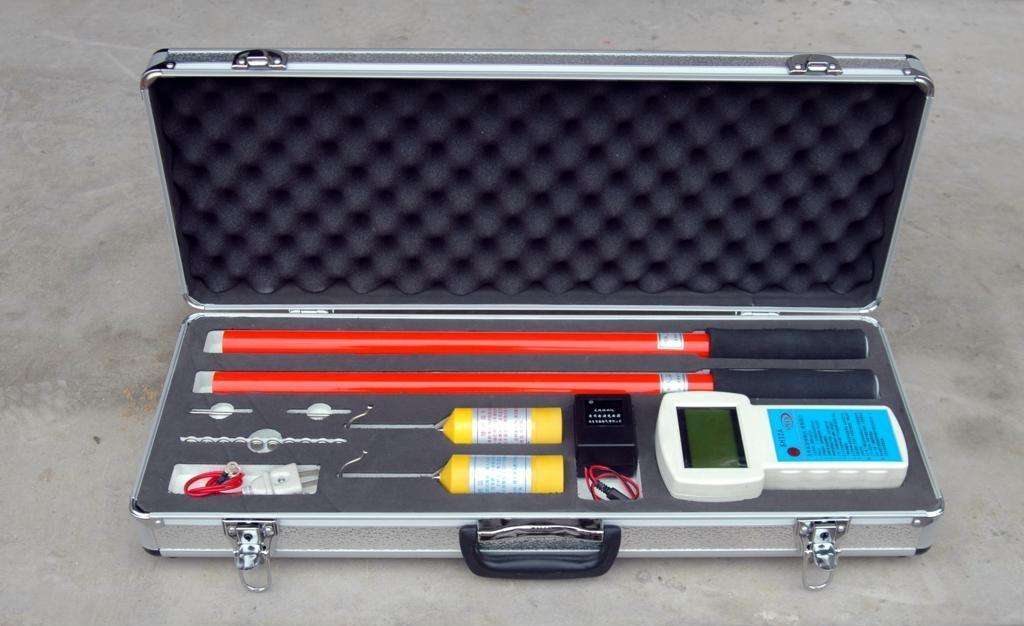
2) Broadband transformers, audio frequency transformers, and intermediate frequency transformers that transmit broadband, audio, and intermediate frequency power and signals; The main advantage of the high-voltage wireless phase detector is that it eliminates the leads connecting the two power grids (power sources), (distance up to 20m) can pass through walls and partitions (boards), and is not limited by any terrain or facility structure.
3) Pulse transformers, drive transformers, and trigger transformers that transmit pulse, drive, and trigger signals;
4) Isolation transformers that provide insulation isolation between primary and secondary sides, and shielding transformers that provide shielding;
5) Phase conversion transformers that convert single-phase to three-phase or three-phase to single-phase, and phase-shifting transformers (phase shifters) that change the output phase;
6) Frequency multipliers or dividers that change the output frequency;
7) Matching transformers that match the output impedance with the load impedance;
8) Voltage stabilizing transformers (including constant voltage transformers) or current stabilizing transformers that stabilize output voltage or current, and voltage regulating transformers that adjust output voltage;
9) Filter inductors that filter AC and DC;
10) Electromagnetic interference filter inductors that suppress electromagnetic interference, and noise filter inductors that suppress noise;
11) Absorption inductors that absorb surge currents, and buffer inductors that slow down the rate of current change;
12) Energy storage inductors that store energy, and commutation inductors that assist semiconductor switching commutation;
13) Magnetic switch inductors and transformers that act as switches;
14) Controllable inductors and saturable inductors that adjust inductance;
15) Voltage transformers, current transformers, pulse transformers, DC transformers, zero-flux transformers, low-power transformers, zero-sequence current transformers, and Hall current/voltage detectors that convert voltage, current, or pulse detection signals.
From the above enumeration, it can be seen that whether it is DC power, AC power, or special power, electronic transformers are indispensable. Some people define power supplies as DC power and AC power that undergo high-frequency switching conversion. When introducing the role of soft magnetic electromagnetic components in power supply technology, various electromagnetic components in high-frequency switching power supplies are often cited as examples. At the same time, among the soft magnetic electromagnetic components used in electronic power supplies, various transformers occupy a dominant position. Therefore, transformers are used as representatives of soft magnetic components in electronic power supplies, and they are called "electronic transformers".