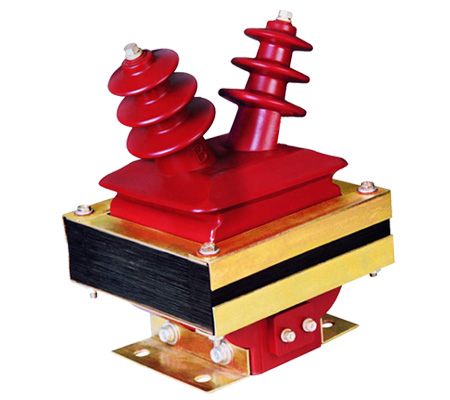
The main difference is that their working states during normal operation are quite different, as shown below:
1) The secondary side of a current transformer can be short-circuited, but must not be open-circuited; the secondary side of a voltage transformer can be open-circuited, but must not be short-circuited. The single-phase relay protection tester has complete functions, and a single unit can complete all the above tests at one time. It has strong applicability, digital display of measurement time, AC/DC voltage and current, intuitive and accurate readings, and button operation for convenience and flexibility.
2) Relative to the load on the secondary side, the primary internal impedance of a voltage transformer is so small that it can be ignored, and the voltage transformer can be considered a voltage source; while the primary internal resistance of a current transformer is very large, so it can be considered a current source with infinite internal resistance.
3) During normal operation, the magnetic flux density of a voltage transformer is close to the saturation value, and it decreases during faults; the magnetic flux density of a current transformer is very low during normal operation, but during a short circuit, the primary short-circuit current becomes very large, greatly increasing the magnetic flux density, sometimes even far exceeding the saturation value.