Automatic Trace Moisture Analyzer for Measuring Water Content in Petrochemical Products
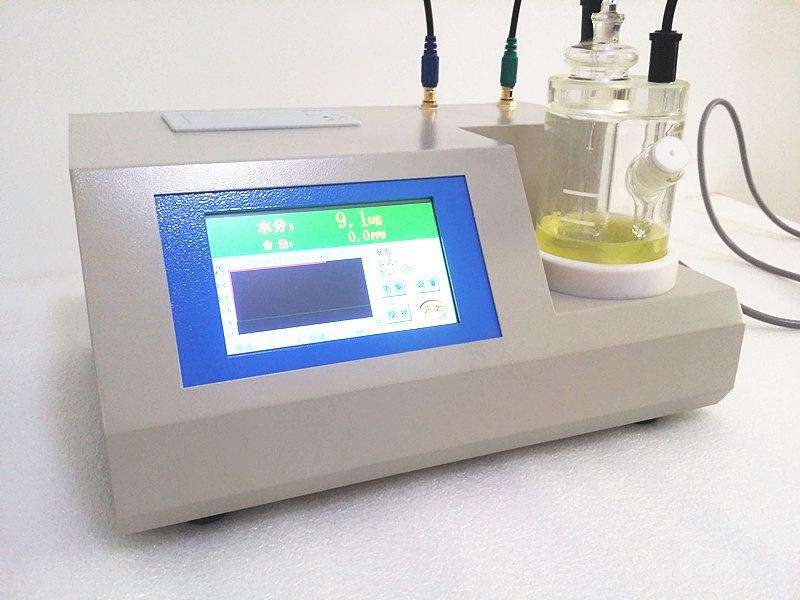
The automatic trace moisture analyzer is a trace moisture analyzer based on the Karl Fischer coulometric principle. It features fast and accurate measurement, reagent reuse, and simple daily maintenance. It can measure down to PPM levels, making it widely used in many laboratories.
The water content in petrochemical products is generally low, so the Karl Fischer coulometric method is usually employed for determination. Sometimes, to improve the solubility of long-chain compounds, a solubilizer needs to be added. These products can be classified into the following categories:
1. Hydrocarbon compounds
Tested include: pentane, hexane, dimethylbutane, methylbutadiene, benzene, toluene, xylene, ethyltoluene, dimethylstyrene, octane, dodecane, tetradecene, eicosane, petroleum ether, gasoline, cyclohexylamine, methylcyclohexylamine, cycloheptane, ethylene cyclohexylamine, cyclododecane, decylcyclohexane, dicyclopentadiene, dimethylnaphthalene, trimethylstyrene, biphenyl, etc.
2. Hydraulic oil, insulating oil, transformer oil, and turbine oil
In fact, the water content in this category is generally extremely low, and sometimes the solubility may not be particularly good. Therefore, during measurement, it is necessary to shake the electrolytic cell bottle several times in advance to make the blank water value as low and stable as possible. If necessary, a solubilizer should be added to improve its solubility. When the total injection volume exceeds 10 ml, stop stirring. The oil sample will separate from the Karl Fischer reagent. After extracting the excess oil sample, the next experiment can be conducted.
3. Engine fuels
These products include: unleaded gasoline, aviation gasoline, kerosene, diesel, etc.
4. Alcohols
These substances include: methanol, ethanol, propanol, isopropanol, butanol, glycerol, pentanediol, hexanol, methylpentanol, cyclohexanol, methylpentanediol, heptanol, hexanetriol, dimethylpentanol, octanol, ethylheptanol, nonanol, geraniol, dodecanol, benzyl alcohol, phenoxyethanol, phenylpropanol, stearyl alcohol, cetyl alcohol, ethylene glycol, sorbitol, etc.
5. Esters
These samples include: ethyl acetoacetate, ethyl acetate, ethyl acrylate, ethyl propionate, ethylhexyl nitrate, amyl acetate, butyl acetate, glycerol monostearate, ethyl levulinate, bromoisobutyrate, etc.
6. Ethers
These substances include: diethyl ether, dioxane, diethylene glycol monomethyl ether, diethylene glycol diethyl ether, polyethylene glycol, anisole, fluoromethyl ether, iodoanisole, resorcinol dimethyl ether, etc.