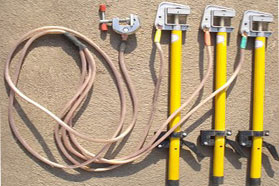
220KV Substation Line Grounding Wire Introduction:
It is a temporary high-voltage grounding wire used after power outage in the power industry. It is a wire directly connected to the earth, also known as a safety return line. It prevents harm to maintenance personnel from sudden power restoration by transferring high voltage to the earth, serving as a lifeline. Sometimes it is also called a "personal safety wire".
220KV Substation Line Grounding Wire Uses and Classification:
1. When overhauling high-voltage lines or equipment, to prevent sudden power supply, the three-phase overhead lines or busbars on the power supply side should be temporarily grounded with grounding wires.
2. To prevent induced voltage from adjacent high-voltage lines or equipment from causing harm to the human body on the de-energized lines or equipment, or to prevent possible induced voltage from causing harm to the human body during maintenance of de-energized equipment or lines, the relevant parts of the de-energized lines or equipment should be temporarily grounded with grounding wires.
3. When working on de-energized equipment, the residual charge on the equipment should be discharged using a temporary grounding wire, also known as "discharging".
(1) High-voltage grounding wires can be classified by usage environment into: indoor busbar type grounding wires (JDX-NL) and outdoor line type grounding wires (JDX-WS).
(2) High-voltage grounding wires can be classified by voltage level into: 10KV grounding wires, 35KV high-voltage grounding wires, 110KV grounding wires, 220KV high-voltage grounding wires, 500KV high-voltage grounding wires.
(3) The length of the insulating operating rod required for grounding wires should comply with national standards.
Precautions:
(1) When hanging the grounding wire: first connect the grounding clamp, then the power connection clamp; when removing the grounding wire, follow the procedure: first remove the power connection clamp, then the grounding clamp.
(2) Ensure the equipment or line is de-energized before using this device.
(3) During use, operators should wear relevant protective equipment such as insulating boots, insulating gloves, and safety helmets, and use it under the supervision of a dedicated person.