Electrical Control Console Price
Daru Electric recommends for you
Working Principle
The distribution box is a low-voltage distribution device assembled by mounting switchgear, measuring instruments, protective appliances, and auxiliary equipment in a closed or semi-closed metal cabinet or on a panel according to electrical wiring requirements. During normal operation, circuits can be connected or disconnected manually or automatically. In case of faults or abnormal operation, protective appliances cut off the circuit or trigger an alarm. Measuring instruments can display various parameters during operation, adjust certain electrical parameters, and provide prompts or signals when deviating from normal working conditions. It is commonly used in power generation, distribution, and substations.
Product Uses
1. Facilitates management and is convenient for maintenance when circuit faults occur.
2. Distribution boxes, along with distribution cabinets, distribution panels, and distribution boards, are complete sets of devices for centrally installing switches, instruments, and other equipment.
3. Common distribution boxes are made of wood or iron plates. Nowadays, due to high electricity consumption, iron ones are more widely used.
4. The purpose of the distribution box: of course, it facilitates power on/off, and serves to measure and determine the status of power supply.
Product Classification
1. Fixed panel-type switchgear, often called switchboard or distribution panel. It is an open-type switchgear with a panel shield. The front provides protection, but the back and sides can still touch live parts, with low protection level. It is only suitable for industrial and mining enterprises with low requirements for power supply continuity and reliability, used for centralized power supply in substations.
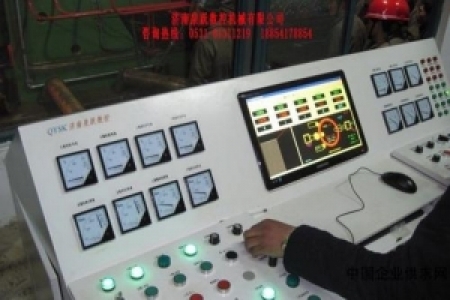
2. Protective (i.e., enclosed) switchgear refers to a low-voltage switchgear where all sides except the mounting surface are enclosed. The electrical components such as switches, protection, monitoring, and control are installed in a closed housing made of steel or insulating material, which can be mounted against or away from the wall. Isolation measures between circuits inside the cabinet can be omitted or implemented using grounded metal plates or insulating plates. Usually, the door has mechanical interlocking with the main switch operation. Additionally, there are protective table-type switchgears (i.e., control consoles) with control, measurement, and signal electrical appliances mounted on the panel. Protective switchgear is mainly used as distribution devices at industrial sites.
3. Drawer-type switchgear. This type of switchgear uses steel plates to make a closed housing, and the electrical components of incoming and outgoing circuits are installed in withdrawable drawers, forming functional units that can complete a certain type of power supply task. Between the functional unit and the busbar or cable, grounded metal plates or plastic functional plates are used to separate them, forming three areas: busbar, functional unit, and cable. There are also isolation measures between each functional unit. Drawer-type switchgear has high reliability, safety, and interchangeability, and is a relatively advanced switchgear. Currently, most switchgear produced is drawer-type. They are suitable for industrial and mining enterprises and high-rise buildings requiring high power supply reliability, serving as centralized control distribution centers.
4. Power and lighting distribution control boxes. Mostly closed vertical installation. Due to different usage occasions, the protection level of the enclosure varies. They mainly serve as distribution devices at industrial production sites.
Note: The above information and technical parameters are compiled and released by Yangzhou Daru Electric Co., Ltd.