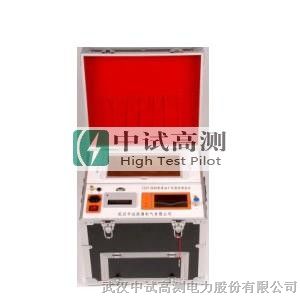
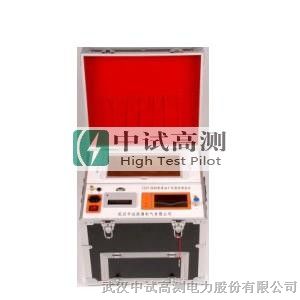
*Insulating Oil Dielectric Strength Tester FSG014*Insulating Oil Dielectric Strength Tester FSG014*Insulating Oil Dielectric Strength Tester FSG014*Insulating Oil Dielectric Strength Tester FSG014
Main Factors Affecting the Results of Oil Withstand Voltage Tester
When using theoil withstand voltage testerfor testing, impurities in the insulating oil are first polarized in the electric field, attracted to the areas with the strongest electric field strength, forming impurity "small bridges." Between the 2.5mm sphere gap, impurities are relatively numerous. The "small bridges" formed by damp impurities have higher conductivity, and the current flowing through them is large, causing intense heating of the "small bridges." Consequently, the moisture in the "small bridges" and the nearby oil boil and vaporize, creating a gas channel, i.e., a "bubble bridge," which causes the tested oil to discharge at a lower voltage. If the fibers in the impurities are not damp, the conductivity of the impurity bridges is low, and their impact on the oil spark discharge voltage is relatively small. During sampling and measurement, the oil sample inevitably comes into contact with the surrounding atmosphere, and moisture and dust from the air will inevitably mix into the oil. These impurities in the oil and water molecules dissolved in the oil and tightly bound to oil molecules will align and aggregate along the electric field direction long before the pure oil molecules are polarized and ionized between the electrodes. They then ionize to form tiny pathways (i.e., "small bridges"), which connect and penetrate the two electrodes, leading to oil breakdown. The more impurities in the oil, the easier it is to form "small bridges" (pathways), and the lower the breakdown voltage. This indicates that during each voltage increase and breakdown process of the oil withstand voltage tester, moisture from the air is mixed in, making the results of each oil withstand voltage tester test inconsistent.
Based on the above testing experience, let's ponder: when the air humidity is high, the longer the extracted oil sample is left or the longer the test is delayed, the more severely the oil sample is contaminated. Especially just before the oil sample breaks down, the oil surface between the two electrodes may show a phenomenon similar to boiling, which is also the time when moisture and impurities from the air are most easily mixed in. Therefore, after oil sample collection, the sample placed in the oil cup should be tested for dielectric strength as soon as possible according to the operating procedures, and should not be exposed to air for a long time or reused multiple times.
Air quality varies in different regions. In China's coastal areas, the moisture in the air contains corrosive and highly conductive salts, which contaminate the oil medium more severely.
Oil with high insulation strength, when left for a period under high humidity conditions, will have its insulation strength decrease when tested again; the longer the time, the greater the decrease, even up to about 20KV. Conversely, oil with low insulation strength containing water, when left for 6-8 hours under dry conditions with low humidity and then tested, the first breakdown voltage can be higher than the measured value by about 15KV. Obviously, this is because the moisture on the oil surface evaporates and the particulate impurities inside the oil settle to the bottom. When the water content in the oil is extremely low, the spark discharge voltage value will significantly decrease. This conclusion has also been confirmed through our tests with the oil withstand voltage tester.
Product Introduction
ZSJY-80D insulating oil withstand voltage tester is developed according to the national standard GB-86 "Insulating Oil Dielectric Strength Determination Method". The instrument's LCD display can show the test process and results, and the built-in EEPROM memory can save more than 100 sets of test data and results. All human-machine interaction operations are completed by a rotary mouse, and the micro printer can print test results at any time. The ZSJY-80 tester is simple to operate, highly reliable, stable, and has strong anti-interference capability, with no crash phenomena during the test.
Product Aliases
Insulating oil tester, oil withstand voltage tester, insulating oil withstand voltage tester, oil dielectric strength tester, insulating oil dielectric strength automatic tester, insulating oil withstand voltage automatic tester, fully automatic insulating oil withstand voltage tester, insulating oil dielectric strength tester, automatic oil tester, fully automatic oil tester, insulating oil withstand voltage tester, transformer oil withstand voltage tester, oil dielectric strength tester
Product Parameters
1 Input voltage: AC 220V±22V 50Hz±0.5Hz
2 Output voltage: AC 0~80KV
3 Voltage rise rate: 2KV/s±10%
4 Accuracy class: Class 3
5 Continuous test times: 1-9 times
6 Stirring time: 0~99 seconds
7 Rest time: 0-9 minutes 59 seconds
8 Can store 100 sets of data
9 Voltage limit setting: 20KV----70KV
10 Withstand voltage time: 1 minute-----10 minutes
11 Ambient temperature: 5-40℃
12 Relative humidity ≤80%RH
13 Volume: 440×370×400mm
14 Weight: 33kg