Introduction to High Current Load Tester:
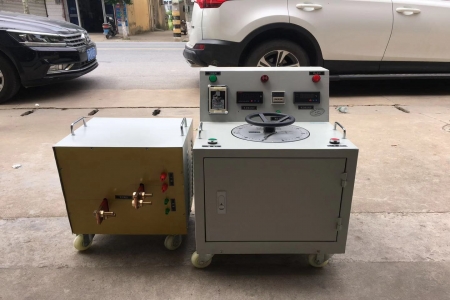
Adopting imported high magnetic permeability materials, with exquisite design, compact size, strong electric dynamic resistance, and convenient use, this series of high current generators is essential equipment for places requiring high current in electrical debugging across various industries. It is applied in power plants, substations, electrical appliance manufacturing factories, and scientific research and laboratory units, and belongs to short-time or intermittent duty. It features small size, light weight, and good performance. Suitable for current load tests and temperature rise tests of switches, current transformers, and other electrical equipment at a frequency of 50Hz. This series of products consists of an operation console and a current booster, with characteristics such as no adjustment of output current, smooth current rise, wide load variation range, reliable operation, and simple and safe operation. It can also serve as a current source equipment for current boosting or temperature rise tests in industrial and mining enterprises. Equipped with a transformer, it can conveniently read the test current value.
Features:
A. Light weight, strong load capacity!
B. Output current: three-phase balanced, waveform is standard sine wave
C. Three-phase simultaneous adjustment, or each phase can be adjusted separately
Note: Three-phase high current generator (current can be increased according to user requirements).
Functional features: (1) Imported iron core, small size and light weight (2) 0.5-level digital true RMS meter
(3) No need for external standard CT and ammeter
(4) Coarse and fine adjustment, zero position indication, power supply 220/380/66V
The high current generator adopts an energy-saving high magnetic permeability current booster, and the instrument is indicated by a true RMS 0.5-level digital meter. It is also equipped with a digital electric stopwatch to meet time measurement. It has the characteristics of large output power, strong overload capacity, clear reading, and flexible movement. It is suitable for power system technicians to test current transformers, protection devices, and secondary circuit current tests.
Input power: AC 220V 50Hz.
Rated output: 0-1500A, 2000A, 3000A, 4000A, 5000A, 8000A, 10000A.
Output terminal open-circuit voltage ≥6V.
Dimensions: 540X300X250 (mm)
Precautions:
1. The test work must be carried out by at least two people, one operating and one supervising, to ensure safety.
2. The casing must be grounded. Do not neglect personal safety accidents due to low voltage.
3. The wires from the secondary side of the current booster to the tested object should not be too long, and the cross-sectional area should be sufficient (current density can be considered at 6-8A/mm). The contact surface should be cleaned (can be polished with fine sandpaper), otherwise the joints will heat up, and the current may not rise to the rated value.
4. Before work, check that the power supply has sufficient capacity; otherwise, the power cord will heat up and the voltage will drop, affecting normal operation.
5. There should be no flammable materials at the work site. For temperature rise tests, sufficient fire extinguishing equipment should be prepared.
6. For continuous (temperature rise) tests, someone should be on duty at the site. Regularly check the heating condition of the current boosting source equipment, wires, and joints, and make records. Due to fluctuations in the grid voltage, pay attention to adjusting TD to maintain the rated test current.
7. Test work should comply with the relevant regulations of the electric power safety work regulations and formulate practical safety measures.