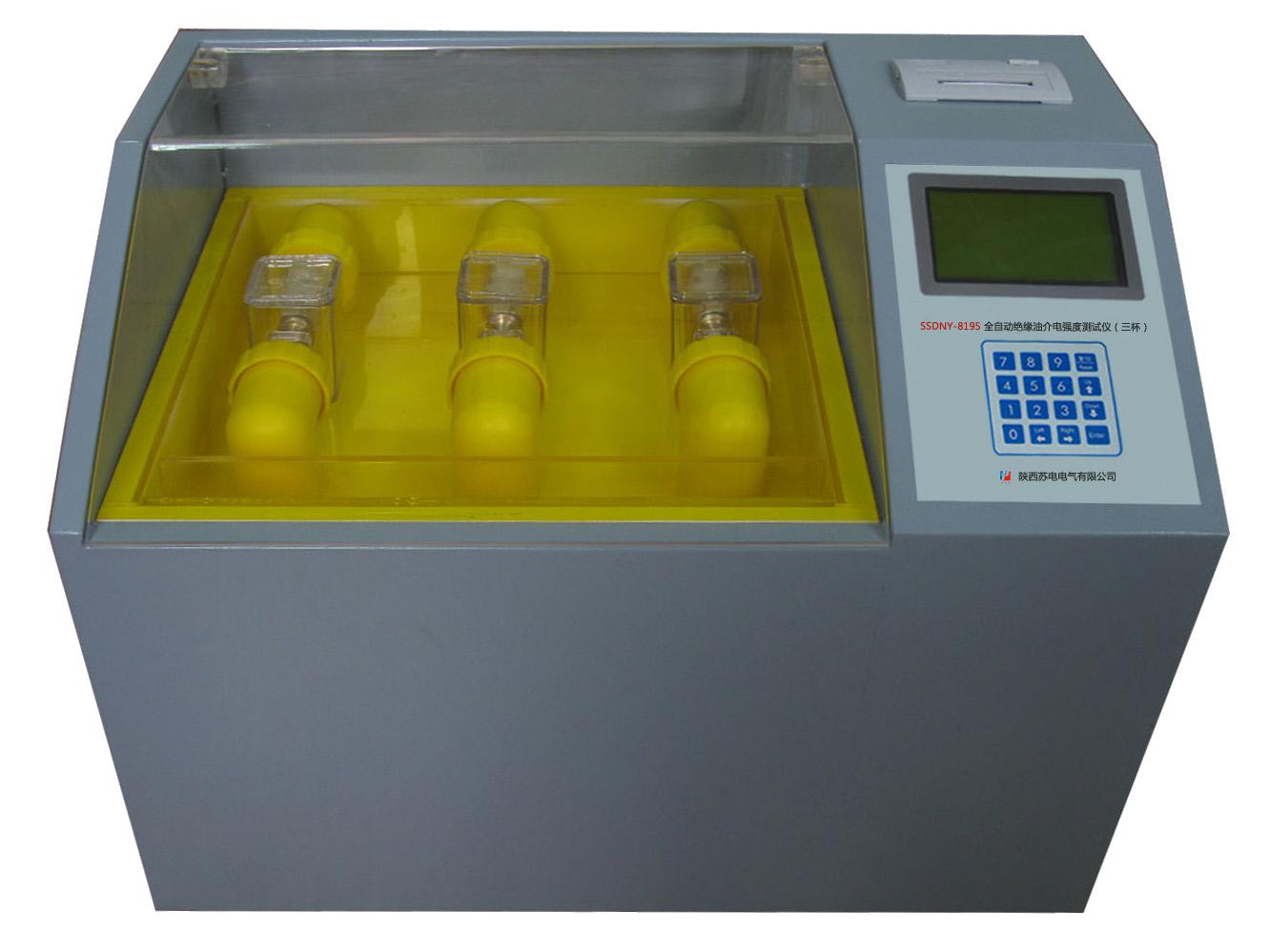

Insulating oil is a commonly used insulating, arc-extinguishing, and cooling medium in electrical equipment. To ensure its good performance during operation, various tests must be conducted regularly, especially the withstand voltage test. The withstand voltage test of insulating oil is carried out in a dedicated breakdown voltage tester, which includes a porcelain or glass oil cup and two disc electrodes with a diameter of 25 mm (should be smooth and free of burn marks). During the test, the oil sample is poured into the oil cup, then the electrodes are placed with a gap of 2.5 mm between them. The test should be conducted in a room with a temperature of 10-35°C and relative humidity not exceeding 75%.
The specific test steps are as follows:
(1) Mix the oil sample evenly, avoiding the generation of air bubbles as much as possible. Place it in the room for several hours to make the oil temperature as close to room temperature as possible.
(2) Connect the oil sample to the test circuit and let it stand for 10-15 minutes to allow air bubbles in the oil to escape.
(3) Close the power supply and increase the voltage at a rate of 3 kV per second until the oil sample breaks down (evident spark discharge or the tester's trip switch trips), and record the voltage value at that instant.
(4) After standing for 5 minutes, repeat the above test. Generally, each oil sample is tested 5 times, and the average voltage value of the 5 tests is taken.
(5) If necessary, take two additional oil samples for the same test, and take the average voltage value of the three oil samples as the test result.
(6) If the voltage is increased to the maximum value of the tester (e.g., 50 kV) and the oil sample still does not break down, it can be held at the maximum voltage for 1 minute. If it still does not break down, the insulating oil is considered qualified in withstand voltage. strength is qualified.