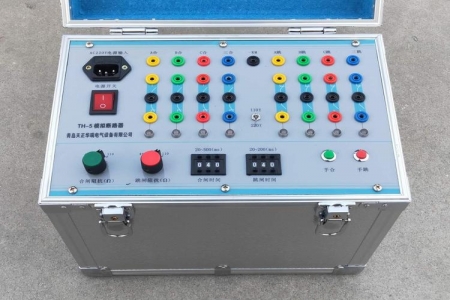

A partial discharge detector is a specialized instrument used to detect partial discharge phenomena in high-voltage electrical equipment. This type of instrument plays an important role in the maintenance and repair of power systems, as it helps technicians identify insulation defects in equipment in a timely manner, preventing major accidents. The following is an outline of an article about partial discharge detectors:
Working Principle and Application of Partial Discharge Detector
1. Introduction
Background: With the continuous expansion of the power system scale, ensuring the safe and stable operation of high-voltage electrical equipment is crucial.
Hazards of Partial Discharge: Partial discharge accelerates the aging of insulation materials, which may ultimately lead to equipment failure and even safety accidents.
Research Purpose: This article aims to introduce the working principle, detection methods, and applications of partial discharge detectors in power systems.
2. Basic Concepts of Partial Discharge
Definition: Partial discharge is a phenomenon where discharge occurs only in a part of the insulation medium of power equipment.
Formation Causes: Introduce common causes leading to partial discharge, such as material defects, air gaps, etc.
Hazard Analysis: Analyze the hazards of partial discharge to power equipment, including insulation aging, performance degradation, etc.
3. Working Principle of Partial Discharge Detector
Detection Method: The high-frequency pulse current measurement method (ERA method) is one of the most commonly used detection methods for partial discharge detectors.
Signal Capture: When partial discharge occurs under the test voltage, the partial discharge detector captures the pulse current signal through a coupling capacitor.
Signal Processing: The captured pulse signal is amplified by a low-noise preamplifier, filtered by a filter amplifier to select the required frequency band, and further amplified by a main amplifier.
Display and Recording: The discharge pulse is displayed on the elliptical scanning baseline of the oscilloscope screen, while the peak value is displayed on the pulse peak meter.
4. Applications of Partial Discharge Detector
Application Scope: Suitable for testing high-voltage electrical equipment such as transformers, cables, and instrument transformers.
Case Analysis: Provide examples of specific application cases of partial discharge detectors in power systems, such as detection and troubleshooting of 10 kV cable lines.
Preventive Maintenance: Through regular testing, preventive maintenance can be effectively carried out to avoid major accidents caused by partial discharge.
5. Operational Precautions for Partial Discharge Detector
Correct Connection: The input unit should be placed as close as possible to the test object to ensure signal transmission quality.
Parameter Setting: Select the appropriate input unit based on the size of the test capacitance Ca and coupling capacitance Ck.
Safe Operation: When conducting partial discharge tests, safety regulations must be followed to avoid dangers such as high-voltage electric shock.
6. Conclusion and Outlook
Conclusion Summary: Partial discharge detectors are of great significance for ensuring the safe and stable operation of power systems.
Future Development Trends: Look forward to the future development of partial discharge detection technology, such as the application of intelligent and online monitoring technologies.
7. References
Related Literature: List the relevant academic papers and technical reports cited in this article to provide readers with resources for further learning.
Please adjust or supplement the above outline according to your specific needs. If you need more detailed content or have other specific requirements, please let me know.