Partial discharge mainly refers to the discharge that occurs in a local range when high-voltage electrical equipment such as transformers is under a sufficiently strong electric field. Partial discharge causes local short-circuiting between conductors' insulation but does not produce a conductive channel. That is, this type of discharge only exists in local positions and does not immediately form a complete penetrating breakdown or flashover, so it is called partial discharge. Partial discharge can be mild or intense; the former has less impact on the insulation strength of equipment, while the latter has a greater impact on the insulating medium. Therefore, during the long-term operation of high-voltage electrical equipment, it is necessary to reduce intense partial discharge, and for electrical equipment in operation, monitoring should be implemented. When discharge reaches a certain level, timely maintenance and other operations should be carried out to avoid accidents.
However, the partial discharge amount is very weak and cannot be directly felt by humans. Therefore, professional instruments and equipment are needed to detect partial discharge to determine whether there is intense partial discharge.
The internal insulation of high-voltage equipment such as transformers operates under high voltage for a long time during operation, and the development of technology has led to an increase in the voltage level of transmission lines, so the insulating medium must withstand very high voltages. Therefore, partial discharge is easily generated in some weak insulation areas.
The causes of partial discharge in high-voltage equipment include the following:
1. The electric field is too concentrated at a certain point, or the electric field strength at a certain point is too high.
2. There are bubbles in the solid medium, and impurities are not completely removed.
3. The oil contains water, gas, and suspended particles.
4. In different combinations of media, there is severe electric field distortion at the interface.
The traces of partial discharge on solid insulation often only leave a small spot or a tree-shaped burn mark. In oil, some small differentiated bubbles appear. Although partial discharge time is short and energy is small, it has great risk. Its persistent existence will cause significant damage to insulating materials. First, the insulating materials near the partial discharge are directly bombarded by discharge particles, causing local insulation damage. Second, the heat, ozone, nitrogen oxides, and other active gases generated by discharge have chemical effects, causing local insulation to be eroded and aged, increasing conductivity, and ultimately leading to thermal breakdown.
The detection methods for transformer partial discharge generally include:
1. Electrical measurement method. Use an oscilloscope or radio interference meter to find the characteristic waveform of discharge or the radio interference level.
2. Ultrasonic measurement method. Detect the sound waves generated during discharge, convert the sound waves into electrical signals, record them on tape for analysis, and use the time difference between electrical and acoustic signal transmission to determine the distance from the detection point to the discharge point.
3. Chemical measurement method. Detect the content and change patterns of various dissolved gases in the oil. This test method can detect changes in the composition, proportion, and quantity in the oil, thereby determining whether there is partial discharge (or local overheating).
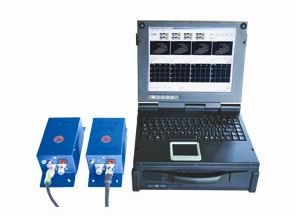
In addition, a partial discharge detector has been developed, which can automatically detect partial discharge during transformer operation.
To avoid the occurrence of partial discharge, the manufacturing unit should carry out reasonable structural design for transformers; carefully construct, improve material purity, and strictly control the quality of each link. The operation unit should strengthen transformer maintenance, monitoring, and other work to effectively avoid the occurrence of transformer partial discharge.