High Current Generator Manufacturer Explains "Anti-Electricity-Theft Technology" for You
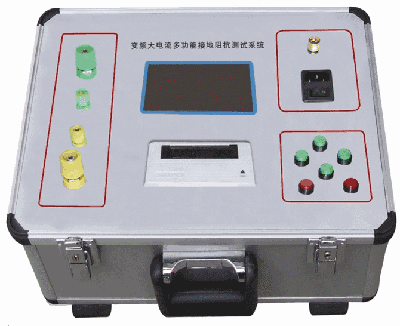
High current generator When conducting high current tests, correctly connect the working circuit according to the product's circuit diagram. Select the appropriate position of the range switch based on the output current. First, adjust the voltage regulator to zero, then press the start button (green). At this point, slowly rotate the handle of the voltage regulator clockwise while watching the ammeter until the required current value is reached. After reaching the set value, immediately turn the handle counterclockwise back to zero, press the stop button, and cut off the power supply.
In daily life, the economic losses and hazards caused by electricity theft are enormous. It not only disrupts the normal order of electricity use but also endangers personal and equipment safety, bringing significant losses to society and power enterprises. Anti-electricity-theft technical measures and management systems play a crucial role in recovering economic losses and ensuring equipment safety for power enterprises.
Effective measures to prevent electricity theft can not only reduce energy loss, lower the line loss rate of power enterprises, and improve economic benefits, but also prevent personal injury or death caused by improper theft operations, which also has a certain effect on the safety management of power enterprises.
Definition and hazards of electricity theft:
Electricity theft refers to the behavior of electricity users who illegally occupy and use electrical energy through the following illegal methods:
1. Unauthorized connection to the power supply facilities of power supply enterprises or other units or individuals for electricity use;
2. Bypassing the electricity metering device of the power supply enterprise for electricity use;
3. Forging or opening the seal of the electricity metering device for electricity use;
4. Deliberately damaging the electricity metering device or deliberately causing its metering to reduce or fail;
5. Using devices that cause the metering device to be inaccurate, resulting in reduced or stopped electricity metering;
6. Deliberately deleting or modifying data and application programs stored, processed, or transmitted in the electricity fee metering information system of the power supply enterprise for electricity use;
7. Temporary users without installed electricity metering devices using electricity beyond the time and capacity agreed upon by both parties;
8. Using other methods to steal electricity.
The hazards caused by electricity theft are enormous, not only disrupting the normal order of the electricity market but also endangering personal and equipment safety. Improper theft operations can cause equipment short circuits, burn out power equipment, lead to large-scale power outages, cause immeasurable economic losses, and in more severe cases, endanger human life.
Although the methods of electricity theft are diverse, most use different techniques to make the electricity metering device inaccurate or ineffective, thereby achieving the purpose of under-metering or not metering electricity, thus realizing electricity theft. Of course, there are also more direct methods such as unauthorized private wiring and using electricity without a meter.
Electricity thieves use various methods to deliberately change the normal wiring of the voltage circuit of the electricity metering device or deliberately cause faults in the metering voltage circuit, resulting in the voltage coil of the electricity meter losing voltage or receiving reduced voltage, thereby causing under-metering. This method of electricity theft is called under-voltage method theft.