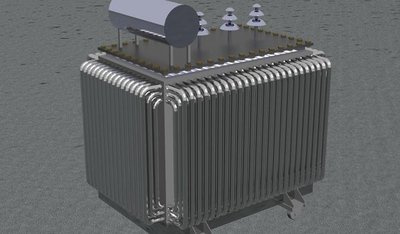
When a sinusoidal AC voltage U1 is applied to the ends of the primary coil, an alternating current I1 flows through the wire and generates an alternating magnetic flux ф1, which passes through the iron core, forming a closed magnetic circuit through the primary and secondary coils. A mutual inductance potential U2 is induced in the secondary coil, while ф1 also induces a self-inductance potential E1 in the primary coil. The direction of E1 is opposite to that of the applied voltage U1, and its magnitude is similar, thereby limiting the magnitude of I1.Transformer loss parameter testerhas the advantages of small size, light weight, high measurement accuracy, good stability, and easy operation. To maintain the existence of the magnetic flux ф1, a certain amount of electrical energy consumption is required, and the transformer itself also has certain losses. Even when the secondary side is not connected to a load, there is still a certain current in the primary coil, which we call the "no-load current".
If a load is connected to the secondary side, the secondary coil generates a current I2, which in turn produces a magnetic flux ф2. The direction of ф2 is opposite to that of ф1, counteracting each other, reducing the total magnetic flux in the iron core, and thus reducing the primary self-inductance voltage E1. As a result, I1 increases, showing that the primary current is closely related to the secondary load. When the secondary load current increases, I1 increases, and ф1 also increases, and the increased part of ф1 exactly compensates for the magnetic flux canceled by ф2, maintaining the total magnetic flux in the iron core unchanged. If the losses of the transformer are not considered, it can be assumed that in an ideal transformer, the power consumed by the secondary load is exactly the electrical power that the primary obtains from the power source. A transformer can change the secondary voltage by changing the number of turns of the secondary coil as needed, but it cannot change the power that the load is allowed to consume.